US Treasuries2026-10-02 03:07:10DCP says a Treasury reversal may need something to break before yields peakU.S. Treasury yields moving above 5% have shifted the market debate away from whether the Federal Reserve will keep hiking and toward a harder question: what part of the economy or credit system will crack first under higher rates. In Forward Guidance’s latest Weekly Roundup, veteran rates and fixed-income trader DCP argued that the bond market’s turning point is less about whether the 10-year Treasury reaches 5.5% or 6% and more about whether elevated borrowing costs finally restrain AI-related capital spending, credit creation, and real-world demand. DCP said the current cycle looks different because large technology companies are still spending heavily on data centers, power, chips, and other AI infrastructure, even as tighter monetary policy tries to cool demand. He also argued that inflation is not being driven only by overheating demand. Energy, diesel, transport, and agricultural costs remain exposed to supply-side shocks that rate hikes cannot directly fix. In his view, the most important stress signals may emerge first in small businesses, commercial real estate, regional banks, and private credit rather than in large-cap tech stocks or headline equity indexes. He laid out several conditions that could support a bond-market turn, including a clearer end to Fed tightening, slower AI capex, easing energy pressure, a meaningful equity correction, weaker employment, or another shock that forces a repricing of policy expectations.40
PaleBlueDot A2026-09-30 06:24:47PaleBlueDot AI seeks $600 million credit line for chip purchases in South KoreaPaleBlueDot AI, an artificial intelligence startup, is seeking a $600 million private credit facility from asset manager Brookfield, according to Techub, which cited Crypto Briefing. The funding is intended mainly for large-scale chip purchases in South Korea. The company plans to use the procurement to support its broader expansion across Asia. The report did not disclose further terms of the proposed financing or a timeline for the chip purchases. The update was published by Techub as a brief technology news item.280
Pendle2026-09-30 05:57:21Pendle’s Paolo RightSide says family offices are asking about moving capital on-chain as RWA yield expands beyond TreasuriesAt a panel discussion during GWDC 2026 Korea in Seoul, Paolo RightSide from Growth of Pendle said Pendle is working to bring tokenized real-world asset yield from stablecoins and other low-risk assets into on-chain trading. He described Pendle as a yield-trading protocol that splits yield-bearing assets into principal tokens with fixed returns and yield tokens with floating returns. RightSide said he has seen three shifts in the market. First, users are moving beyond low-risk strategies backed by Treasury yield, while family offices have started actively asking about putting capital on-chain. Second, the sources of yield are broadening from Treasuries to private equity, credit institutions, and even stablecoins backed by GPU compute revenue. Third, programmable yield is making it possible for RWA products to be used as collateral or folded into a wider range of on-chain strategies. He also said programmability means assets can be separated and built on. Principal tokens can be deposited into lending markets for additional strategies, while on-chain redemption comes with no lock-up period and does not require coordination from a custodian. On market structure, he said Pendle uses principal tokens to form forward pricing and is building tradable, hedgeable markets around staking yield and funding rates.150
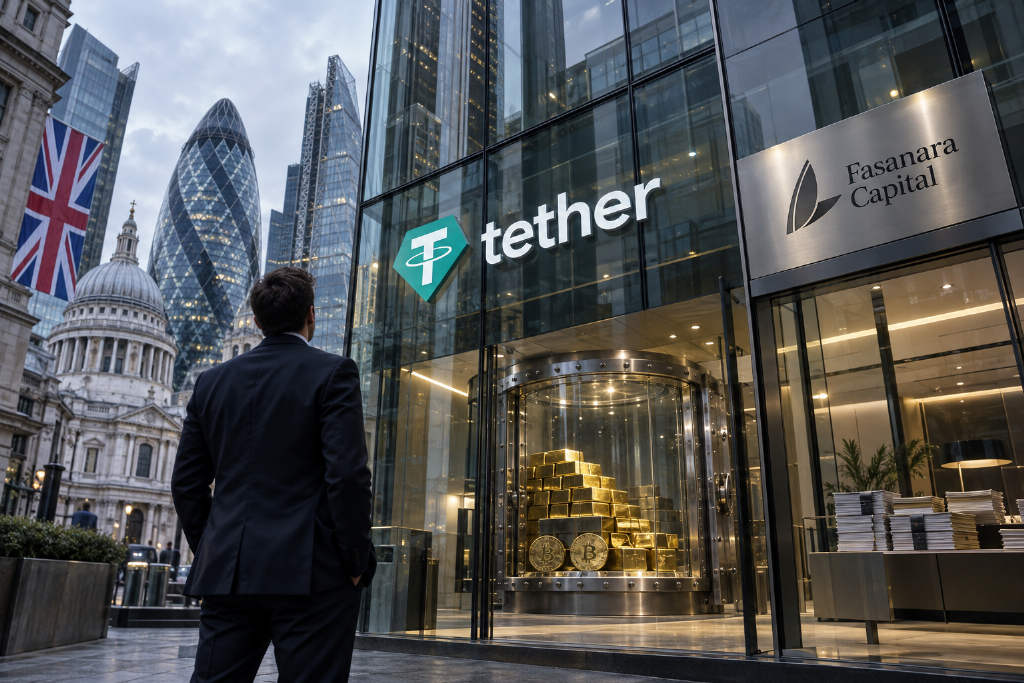
Tether2026-09-29 01:36:00Tether’s excess reserves halved in one quarter as StableFund launch draws fresh scrutinyTether’s reserve position and lending exposure are facing renewed scrutiny after the company and London-based asset manager Fasanara Capital announced StableFund, a private credit fund seeded with a combined $400 million and targeting up to $3 billion from third-party investors. Tether said it will help source USDT-related financing opportunities and provide stablecoin settlement infrastructure, but neither the launch statement nor later disclosures specified how much of the initial capital came from Tether. The timing matters because Tether’s June 30 reserve report showed total assets of about $187.75 billion against liabilities of roughly $183.64 billion, leaving $4.11 billion in excess reserves. That was down from $8.23 billion on March 31, a drop of $4.12 billion, or 50.1%, in a single quarter, while liabilities changed by only $106 million. The article points to declines in gold and Bitcoin prices as the main driver, and notes that Tether still held $13.45 billion in secured loans inside reserves. The report also places Tether’s structure against the backdrop of the U.S. GENIUS Act, which limits what qualifying payment stablecoin issuers can hold as reserves and restricts reserve reuse. With Tether also expanding lending-related activity outside StableFund, the next reserve report is expected to be closely watched for changes in excess reserves, secured loans, and whether any StableFund commitment appears inside reserve disclosures or only at the group level.220
F2 AI2026-09-28 12:24:48F2 AI raises $5 million from Golub Capital in equity investmentF2 AI, a company focused on building artificial intelligence tools for the credit market, has disclosed a $5 million investment from private credit manager Golub Capital, according to Bloomberg. The deal was structured as an equity investment. As part of the arrangement, Golub Capital will gain access to F2 AI’s AI agent suite and use its own data to screen private credit investments, conduct due diligence, underwrite deals, and monitor portfolio positions. The companies did not disclose the valuation implied by the investment. The announcement ties capital with a commercial usage agreement, giving Golub Capital rights to deploy F2 AI’s tools across several parts of its private credit workflow. No additional financial terms were disclosed in the report.200
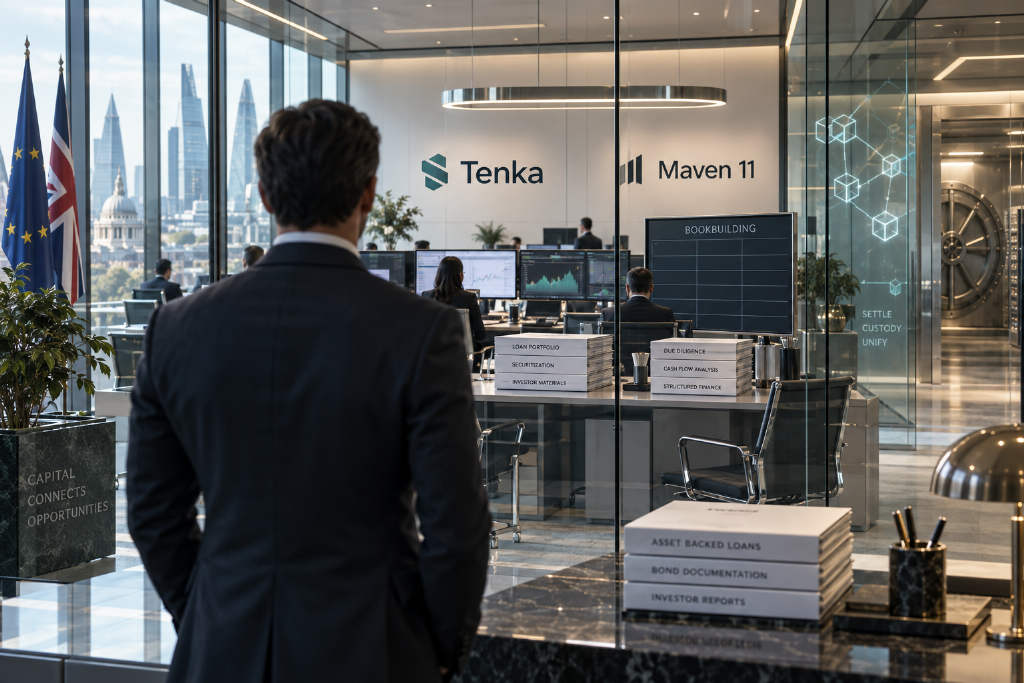
Tenka2026-09-18 01:14:51Tenka raises $2 million in pre-seed round led by Maven 11Tenka has raised $2 million in a pre-seed funding round led by Maven 11, according to Odaily. The company is building an institutional asset-backed finance trading platform that connects asset originators, investors, and liquidity providers. Its offering includes structured bookbuilding, secondary market trading, on-chain settlement, independent valuation, and unified reporting. Tenka said the platform is designed to ease liquidity constraints in private credit by allowing asset-backed finance instruments to be transferred in the secondary market without requiring early borrower repayment or fund-level redemptions. The platform is scheduled to go live later this year. The company’s CEO is Emile Dubié.360
AI2026-09-15 01:13:08The Bigger Question in AI Spending Isn’t When the Bubble BurstsDebate around a possible AI capital expenditure bubble has moved from tech circles into boardrooms, where executives are asking whether current spending levels are sustainable and what a reversal could mean for the broader economy. This article argues that trying to predict the timing of a bubble’s collapse is the wrong frame. A more useful line of inquiry is how the AI buildout affects economic activity, which transmission channels carry the greatest risk, and under what conditions a spending boom becomes a systemic crisis rather than a painful but contained correction. Using a narrower macro lens, the piece estimates AI-related capital spending at about $630 billion in 2026, just under 2% of U.S. GDP. After adjusting for imports, especially semiconductors, the direct boost to U.S. domestic activity falls to roughly $315 billion, or about 1% of GDP. Bloomberg consensus expectations cited in the article suggest that adjusted figure could rise to 1.5% of GDP by 2028. The article then examines three main risk channels: a halt in economic activity, negative wealth effects from equity declines, and tighter credit conditions if debt tied to the AI boom turns sour. Its central conclusion is that AI spending may still represent a manageable macro risk as long as losses do not severely damage the banking system. The article also argues that bubbles can leave durable economic benefits by financing infrastructure that outlives the speculative cycle, and it offers five practical takeaways for corporate managers operating through the current AI investment surge.830
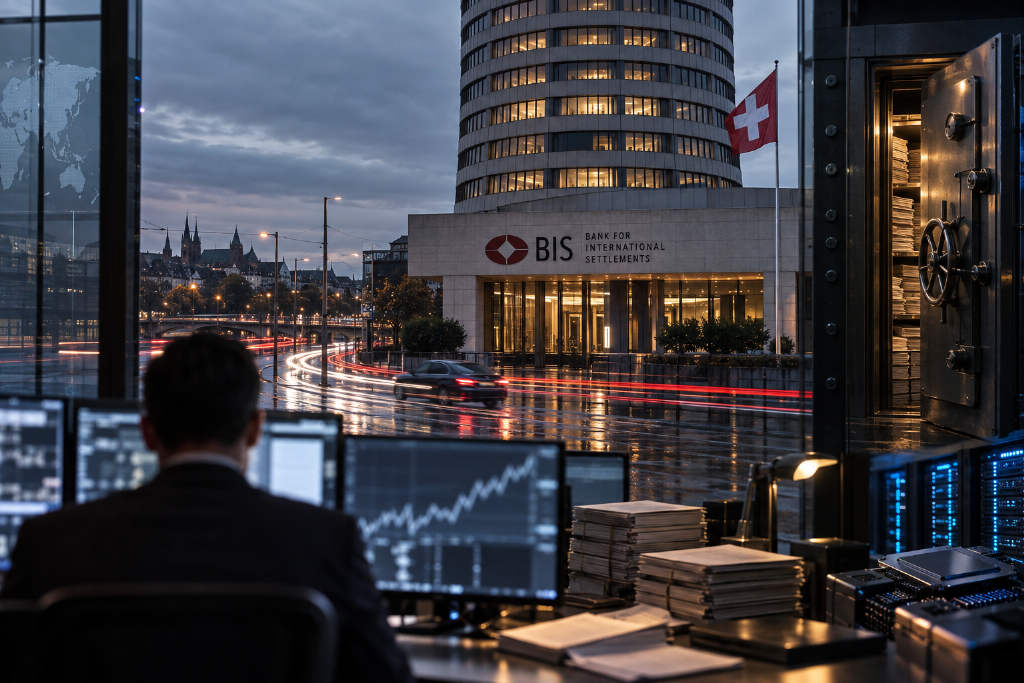
BIS2026-09-14 13:30:08BIS warns AI boom is masking leverage and hidden debt risksThe Bank for International Settlements said in its latest quarterly assessment that the AI investment boom is being accompanied by a rapid build-up of leverage and hidden debt across financial markets. The institution said some of those risks have been accumulating beneath what still looks like a calm market surface. BIS pointed to highly leveraged hedge funds taking a deeper role in core financial markets, warning that a reversal in asset prices could tighten liquidity and amplify volatility. Frank Smets, the bank’s head of economic analysis and statistics, said cross-market leverage is a particular concern. He cited a recent case in which an AI-heavy hedge fund faced margin calls after asset valuations fell and was forced to transfer core equity positions to Citadel. The report also highlighted the growth of AI-linked debt. Private credit borrowing by technology companies rose from about $22 billion in 2010 to more than $1 trillion in 2025, with its share of the private credit market climbing from 22% to 44%. Including other loans, outstanding debt in the technology sector is now close to $2.5 trillion, according to the BIS assessment.830